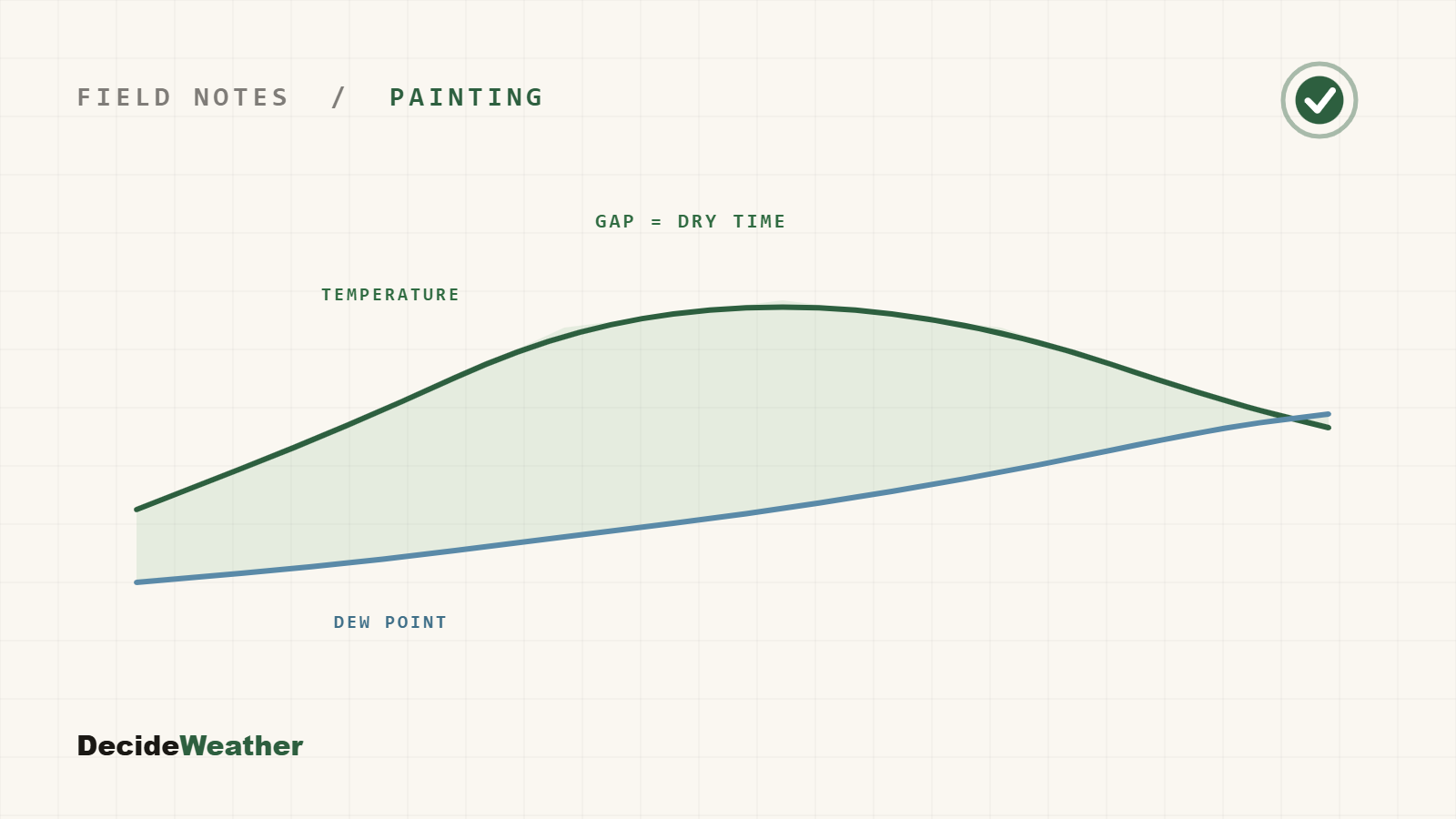
A warm afternoon can still leave paint wet at sundown. Here's how dew point and the temperature spread decide whether an exterior coat actually cures before evening.
The short answer Exterior paint needs the surface to stay several degrees above the dew point through the dry time — as the evening cools and the temperature–dew-point gap closes, a coat that went on in perfect weather can fail before it cures.
Plenty of exterior coats go on in perfect-looking weather and still fail. The culprit usually isn’t the high temperature — it’s the dew point, and how close the surface gets to it as the day cools.
The gap is the dry time
Paint cures while the surface stays comfortably above the dew point. As evening approaches and the temperature falls toward the dew point, drying slows and condensation risk climbs. A wide spread between air temp and dew point means fast, clean curing; a narrow spread means trouble, even at 75°.
What we track for a coat
- Dew point and the temperature spread through the back half of the day
- Surface temperature versus the product’s minimum
- Time to evening — will the coat set before the spread closes?
- Overnight moisture — dew settling on a not-quite-cured surface
Counting backward from sundown
The real question is whether there’s enough dry time left before the spread tightens at dusk. DecideWeather watches the dew-point spread across the day and turns it into a Go / Caution / Stop recommendation for painting — so you start a coat only when it has room to cure.
Common questions
What is the dew point rule for painting?
Keep the surface comfortably above the dew point — commonly at least 5°F — from application through the full dry time, not just at the moment of application.
Why did my exterior paint fail in good weather?
Most likely the surface approached the dew point as the day cooled. Moisture condensing into an uncured film causes adhesion and finish failures even when the afternoon looked ideal.
When is the best time of day to paint exteriors?
Early enough that the coat's dry time completes before the evening temperature–dew-point gap closes. Count backward from sundown rather than starting when the morning warms up.
Forecasts that know your work
Get a Go / Caution / Stop recommendation for every operation, tuned to your job site.
Start your 2-week free trial