Masonry has a reputation as a warm-weather trade, and it is — but there’s such a thing as too hot. When the temperature climbs and the sun beats directly on a wall, mortar can lose its mixing water faster than the cement has a chance to hydrate. The result is mortar that stiffens before the mason can tool it, joints that don’t bond to the unit, reduced compressive and bond strength, and shrinkage cracking that shows up days later. Hot-weather masonry isn’t about whether you can lay brick or block — it’s about controlling moisture loss so the work you lay actually holds.
What heat does to a mortar joint
Mortar gains strength through hydration, a chemical reaction between cement and water that needs that water to stay in the joint long enough to do its job. Hot, dry, windy, sunny conditions all accelerate evaporation, and when the mix dries too fast you get a cascade of problems:
- Poor bond between mortar and the masonry unit — the most common and most serious hot-weather failure, because bond strength is what keeps water out and the wall standing.
- Reduced compressive strength as incomplete hydration leaves the cured mortar weaker than the mix design promised.
- Rapid stiffening and short board life, forcing masons to retemper too often or work mortar that’s already past its window.
- Plastic shrinkage cracking as the surface dries and contracts faster than the body of the joint.
The unit matters too. A dry, absorptive brick or block sitting in the sun acts like a sponge, pulling water straight out of fresh mortar on contact — which is why hot-weather masonry guidance so often comes back to controlling the moisture of both the mortar and the units.
It’s not just the thermometer — it’s the evaporation rate
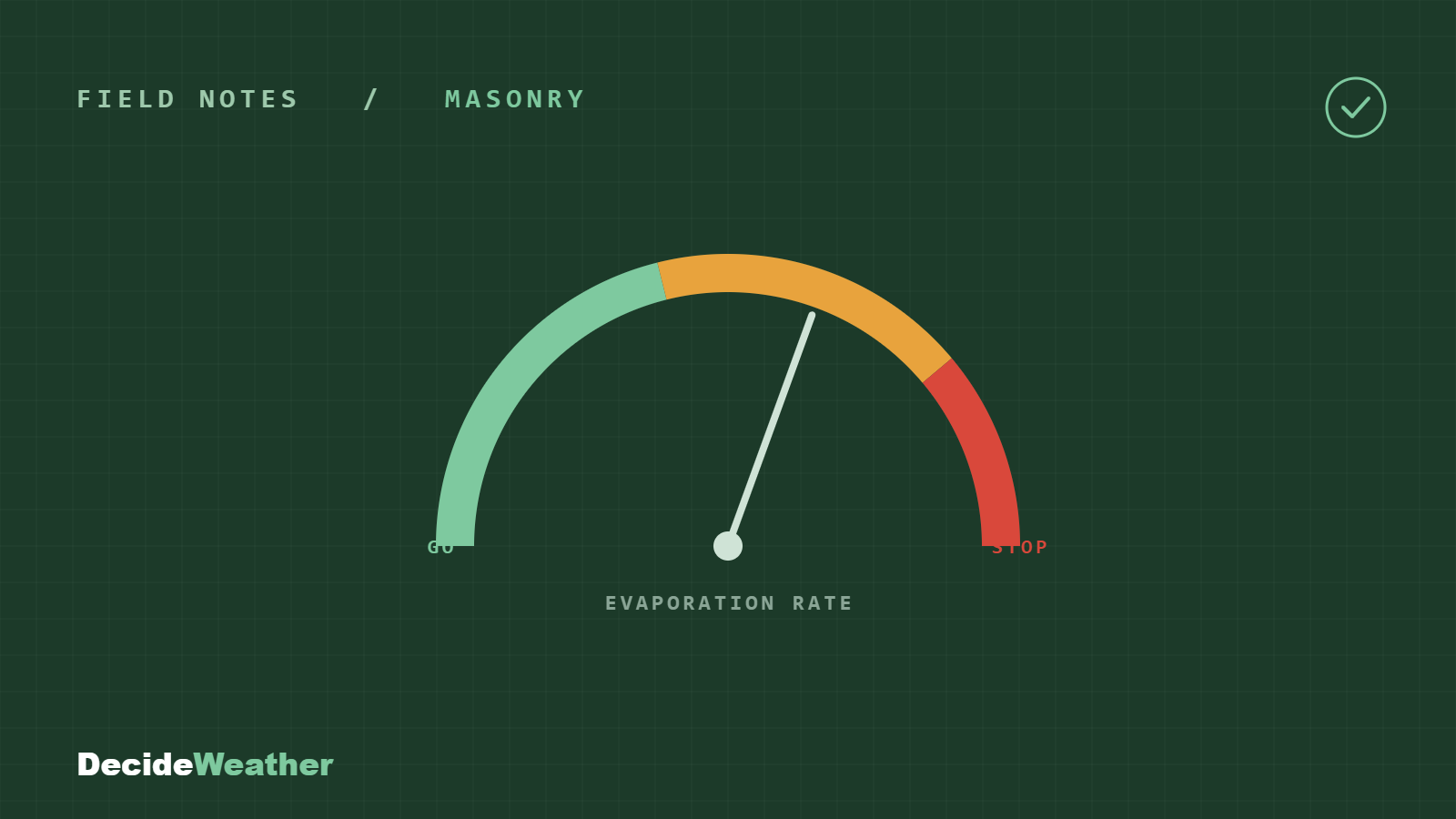
The mistake is judging a hot-weather masonry day by the air temperature alone. Just like with concrete, what actually determines how fast mortar loses water is the combination of four factors — the evaporation rate:
- Air temperature — higher temperatures speed evaporation, but they’re only one input.
- Wind speed — a stiff breeze can do more to dry a joint than another ten degrees of heat. Wind strips the humid boundary layer off the surface and accelerates moisture loss dramatically.
- Relative humidity / dew point — dry air pulls water out fast; humid air slows the loss. Two 90°F days with different dew points are not the same masonry day.
- Direct solar radiation — a wall in full sun runs far hotter than the shaded air temperature suggests, and the units themselves heat up and dry faster.
Industry hot-weather provisions generally kick in around 90°F ambient (and stricter steps around 100°F), but a moderate-temperature day with low humidity and steady wind in full sun can dry a joint just as aggressively as a hotter, calmer, more humid one. That’s why reading the combination beats watching a single number.
Practical moves for hot-weather masonry
When the window is tight, the goal is to slow moisture loss and keep the materials cool and workable:
- Shade the work and the materials. Keep sand, mortar, and units out of direct sun. A shaded board and a tarp over the sand pile make a real difference.
- Cool the mix water. Cold mixing water lowers the mortar temperature and buys workable time. Keep mortar temperatures down rather than letting the mix bake.
- Wet absorptive units (where the unit and spec allow) so they don’t rob the joint of water on contact.
- Mix smaller batches and keep board life short — don’t spread more mortar than the crew can place and tool before it stiffens.
- Fog and cure the finished work to slow surface drying after the units are laid.
- Sequence around the sun. Lay the sun-exposed elevations in the cooler morning and shift to shaded faces as the day heats up.
Reading the window before the crew starts
The biggest win is knowing the shape of the day before the first course goes up — so you can sequence elevations, schedule deliveries, and decide whether the afternoon needs extra protection or should be planned for shaded work. That’s the gap a weather window app fills for masonry the same way it does for concrete and coatings.
In DecideWeather, the same inputs that drive the evaporation rate — temperature, wind, humidity, and sun — feed a Go / Caution / Stop recommendation tuned to the operation. Instead of stepping outside, feeling the heat, and guessing, a superintendent gets a forecasted picture of when the wall is most at risk of drying too fast, and when the conditions ease. That turns hot-weather masonry from a reactive scramble into a planned sequence: exposed faces in the cool window, protection ready for the peak, and the whole crew working when the mortar will actually bond.
Heat doesn’t have to mean weak joints. Control the moisture, read the evaporation rate instead of the thermometer, and plan the wall around the window — and the work you lay in July holds just as well as anything you lay in spring.