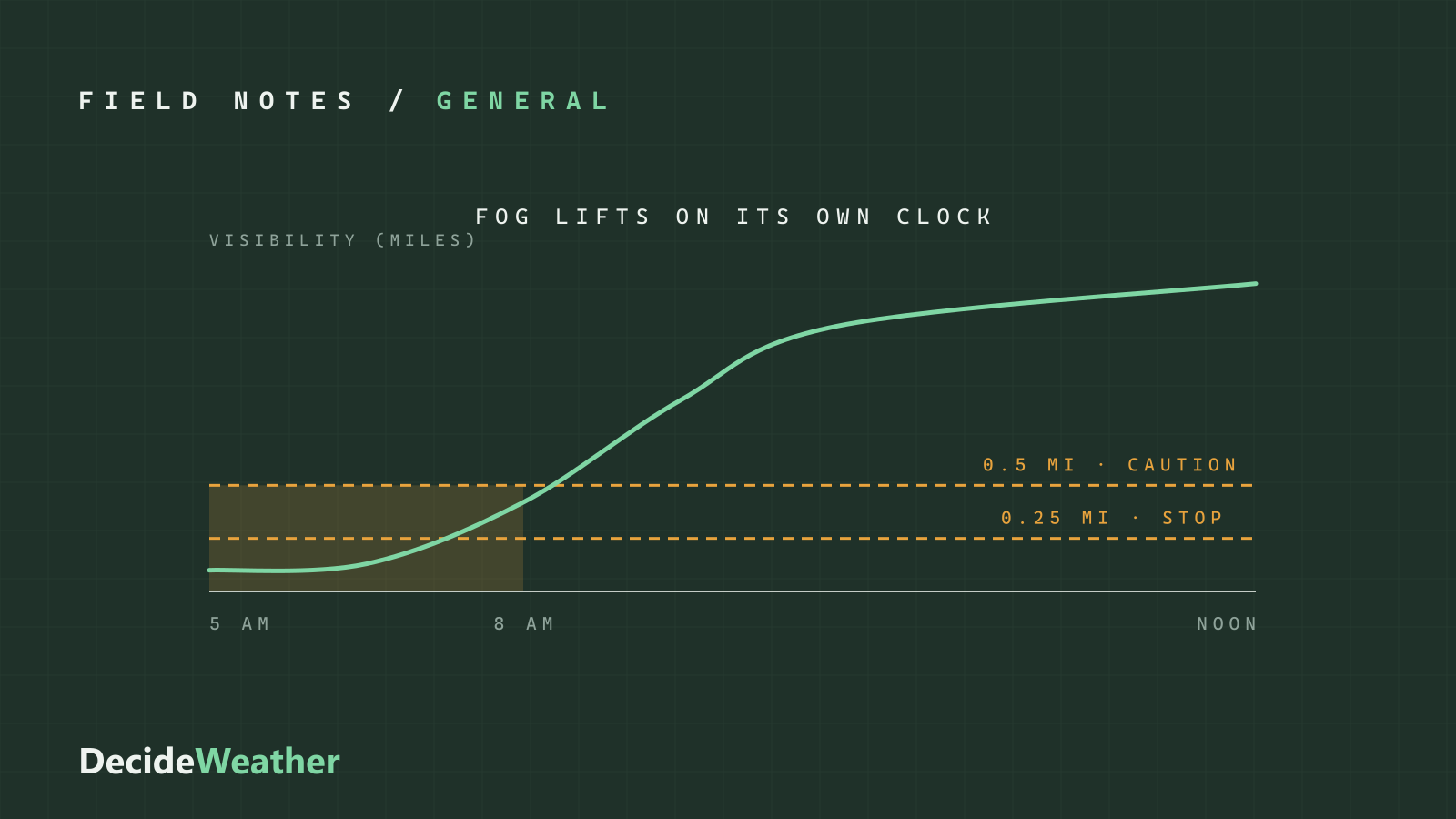
On fall mornings, many job sites start in a cloud. Visibility is a few hundred feet at 6:30 a.m., the crane operator can’t see the top of the building, and the excavator is working near a trench nobody can see across. By 9:30 it’s sunny. Fog is one of the most predictable weather hazards on a site, and one of the most often ignored.
Why fall mornings fog up
The most common fall fog is radiation fog. On a clear, calm night the ground loses heat to the sky, the air just above it cools, and once that air reaches its dew point the moisture condenses into fog. Fall sets this up almost perfectly: long nights, clear skies after fronts pass, calm winds, and soil and water still holding summer moisture.
Radiation fog is most likely when:
- the evening dew point is close to the expected low,
- the sky is clear and the wind is near calm overnight,
- and the site is in a valley, near water, or on low ground where cold air pools.
The good news is that it’s predictable at both ends. It usually lifts one to three hours after sunrise as the sun warms the ground. Fog that forms under a cloud layer, or that’s carried in on moist air, is the kind that lasts all day.
What low visibility means on site
- Cranes and lifts. OSHA’s crane rules require a signal person when the operator’s view of the load or where it’s going is obstructed. In dense fog, that often means the lift waits. Fog also hides overhead power lines, which is the hazard that kills people.
- Equipment and traffic. Excavators, loaders, and trucks working near people need operators who can see them. Backing trucks in fog is a well-known cause of struck-by accidents.
- Roof and elevated work. Fog leaves surfaces wet and slippery, and makes edges, holes, and skylights harder to see.
- Work zones. Drivers approaching a road work zone in fog see flaggers and cones late.
Planning a foggy morning
- Check the evening dew point spread. If temperature and dew point are only a few degrees apart at sunset and the night will be clear and calm, expect fog.
- Sequence the morning. Start with work that doesn’t depend on seeing across the site: material staging, ground-level tasks, and setup. Save lifts and equipment moves for after the fog lifts.
- Watch the low spots. A site in a river valley can be fogged in long after the crew’s drive in was clear.
Visibility, by the hour
DecideWeather reads forecast visibility for every hour on the Roofing and Above Ground operations:
- Caution: visibility under half a mile.
- Stop: visibility under a quarter mile, with temperature and dew point within 3°F of each other (a sign of true fog, not haze).
- Every trade: near-zero visibility, under a tenth of a mile, is a Stop.
The hourly bar on each Job Site card shows the fog lifting hour by hour, so the morning plan can start with setup and schedule the crane pick for 10 a.m. with some confidence.