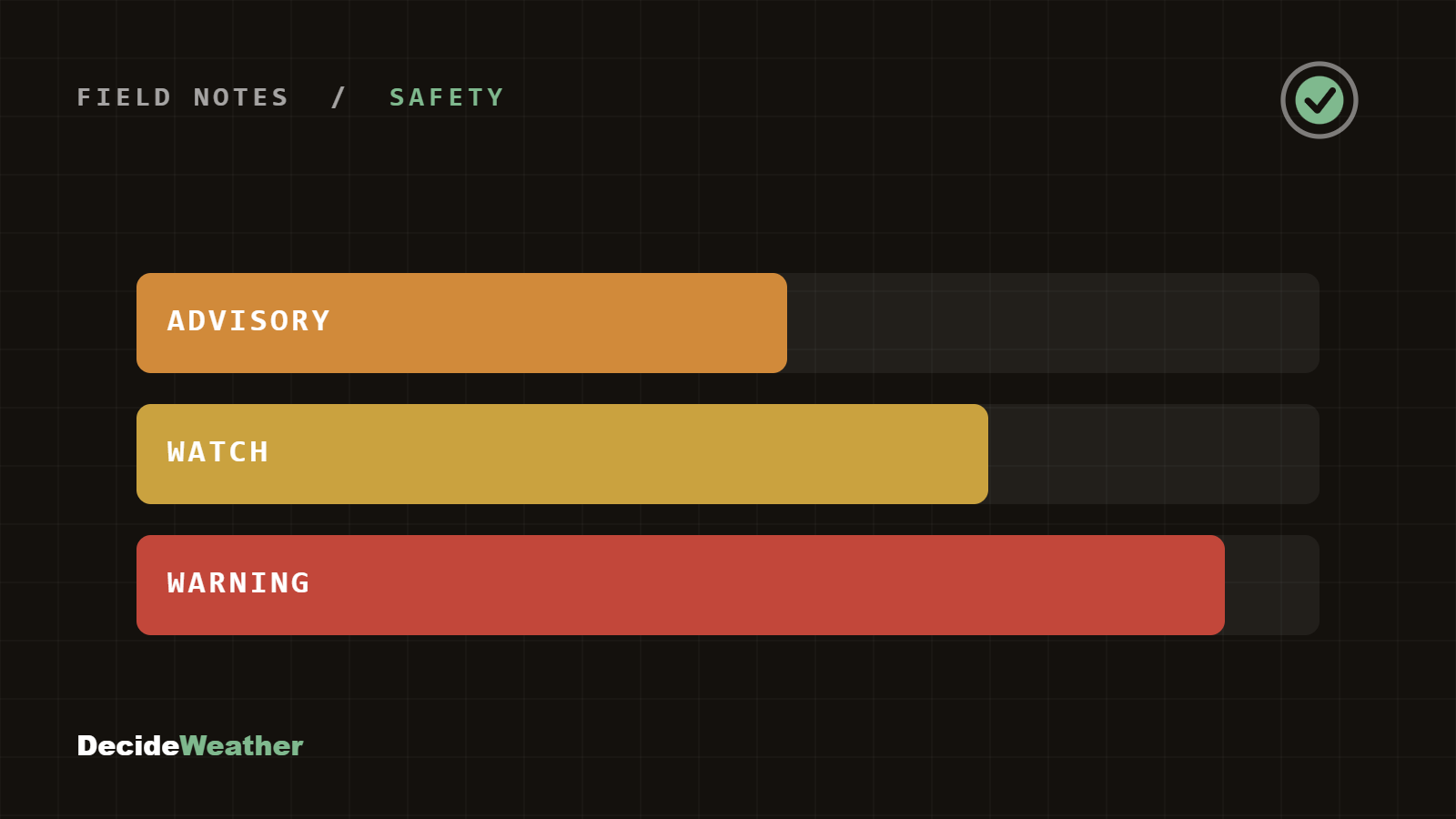
The National Weather Service issues three tiers of alert, and crews often treat them as one. They’re not — each carries a different level of certainty and urgency.
The three tiers, plainly
- Advisory — a nuisance-level hazard is likely (e.g. wind advisory). Work may continue with caution; conditions could slow or limit some operations.
- Watch — conditions are favorable for a hazard to develop. Nothing is happening yet, but it’s time to plan an exit and watch the trend.
- Warning — the hazard is happening or imminent. This is the stop signal; protect people and equipment first.
They inform the call — they don’t replace it
An advisory doesn’t automatically stop every operation, and a quiet sky between alerts doesn’t always mean go. The alert tells you the official hazard level; your operation’s own thresholds (wind limits, lightning distance, rainfast timing) decide whether that specific job can run.
How we surface them
DecideWeather pulls official NWS watches, warnings, and advisories for each job site and shows them alongside the operation’s own window — so the alert and the work decision sit in one place. The recommendation is guidance built on both; the final call is always yours.