The first snow of the season always catches roofing jobs in progress. Some are half-shingled, some are waiting on a dry day, and all of them have a customer asking when the crew will be back. The answer has two parts: when it’s safe to be on the roof, and when it’s right to install on it.
Snow hides the hazards
Even an inch of snow changes a familiar roof:
- Edges disappear. The line between the roof and the drop blurs under a smooth layer of white.
- Skylights and holes vanish. A skylight under snow looks like solid roof. Falls through skylights are a well-known cause of roofing deaths, and snow makes them worse.
- There’s ice underneath. The first flakes often melt on a roof that’s still warm, then refreeze. The snow on top gives no sign of the glaze under it.
OSHA’s fall protection rules don’t change for winter. Skylights and openings must be covered or guarded, and a snow-covered roof is exactly where those protections matter most.
Installation needs a dry deck
Being safe to walk isn’t the same as being ready to install. Snow and frost on the deck melt under underlayment and shingles and trap moisture, the same way rain does. Cold adds its own problems: shingles stiffen and crack when bent, and seal strips need warmth to bond. Frost has its own morning delay, which we covered in September.
A realistic sequence after a light snow:
- Wait for it to stop. Clearing a roof while it’s still snowing just means clearing it again.
- Clear carefully: plastic shovels and brooms, fall protection, nothing thrown on people below. Don’t chip ice, which damages shingles.
- Let the sun finish. A few hours above freezing clears the last film better than scraping.
- Check for ice before loading materials. Especially on north slopes, in valleys, and at eaves.
After heavier snow, an inch or more, it’s often better to call the day and let the melt do the work. Watch the night: a sunny afternoon melt followed by a freeze can glaze the roof by morning.
Snow in the roofing call
DecideWeather’s roofing operations read snow as a rate and as a running total:
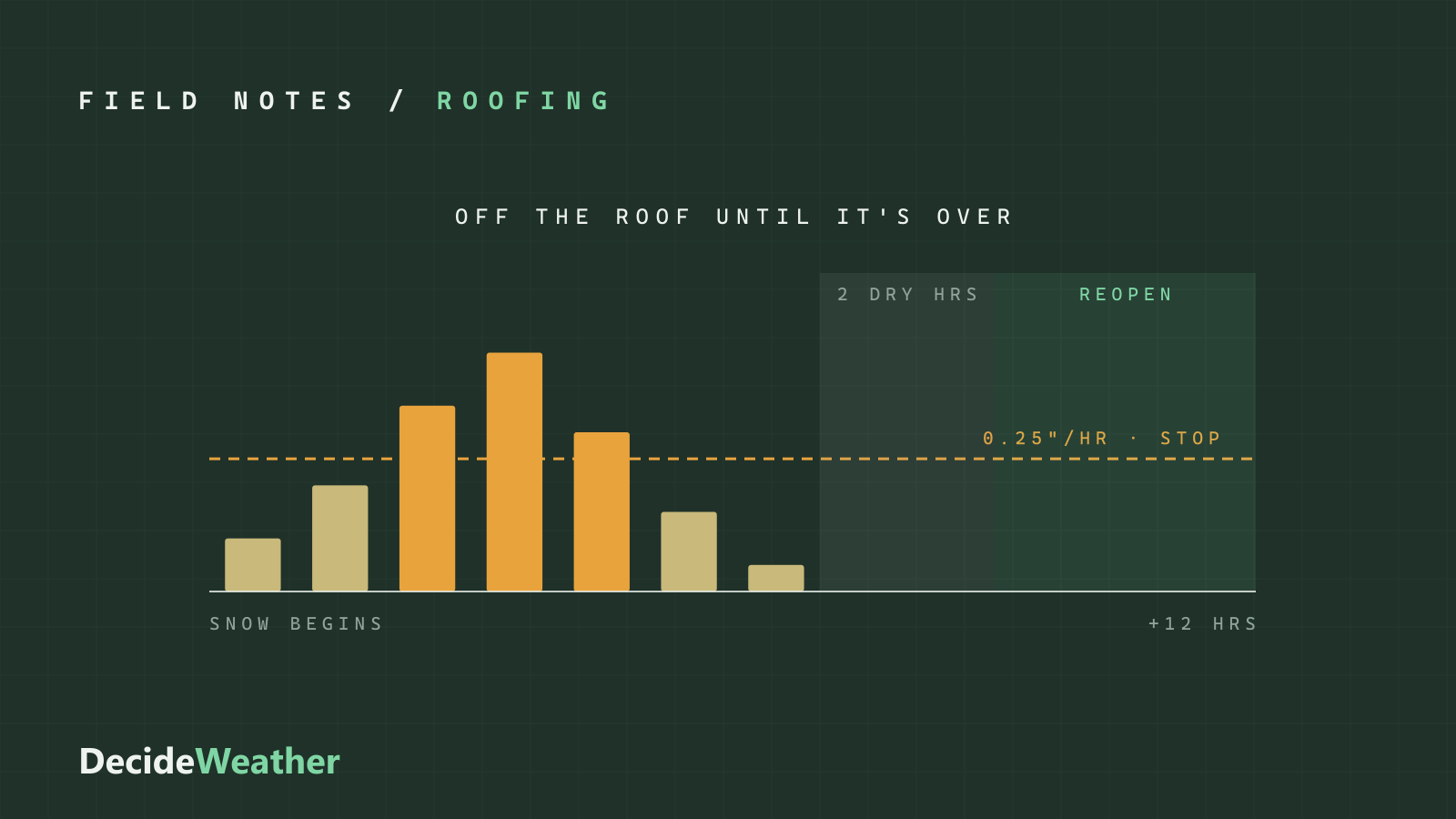
- Stop: snowfall at 0.25 inches per hour or more, or an inch or more over 12 hours.
- Caution: lighter snow.
- Ice: ice accumulation of 0.05 inches or more is a Stop for installation and tear-off.
Once more than an inch of snow has fallen in the previous 12 hours, every roofing operation at that site stays closed until two consecutive dry hours have passed. The Job Site card doesn’t flip back to Go the moment the flakes stop.
Snow in the forecast also triggers an alert. For roofing sites, Alerts sends a push when a workday’s forecast snow for the operation climbs past 4 inches, and again at 8, looking 12 to 72 hours ahead. That’s time to get tarps on and materials covered before the snow arrives.