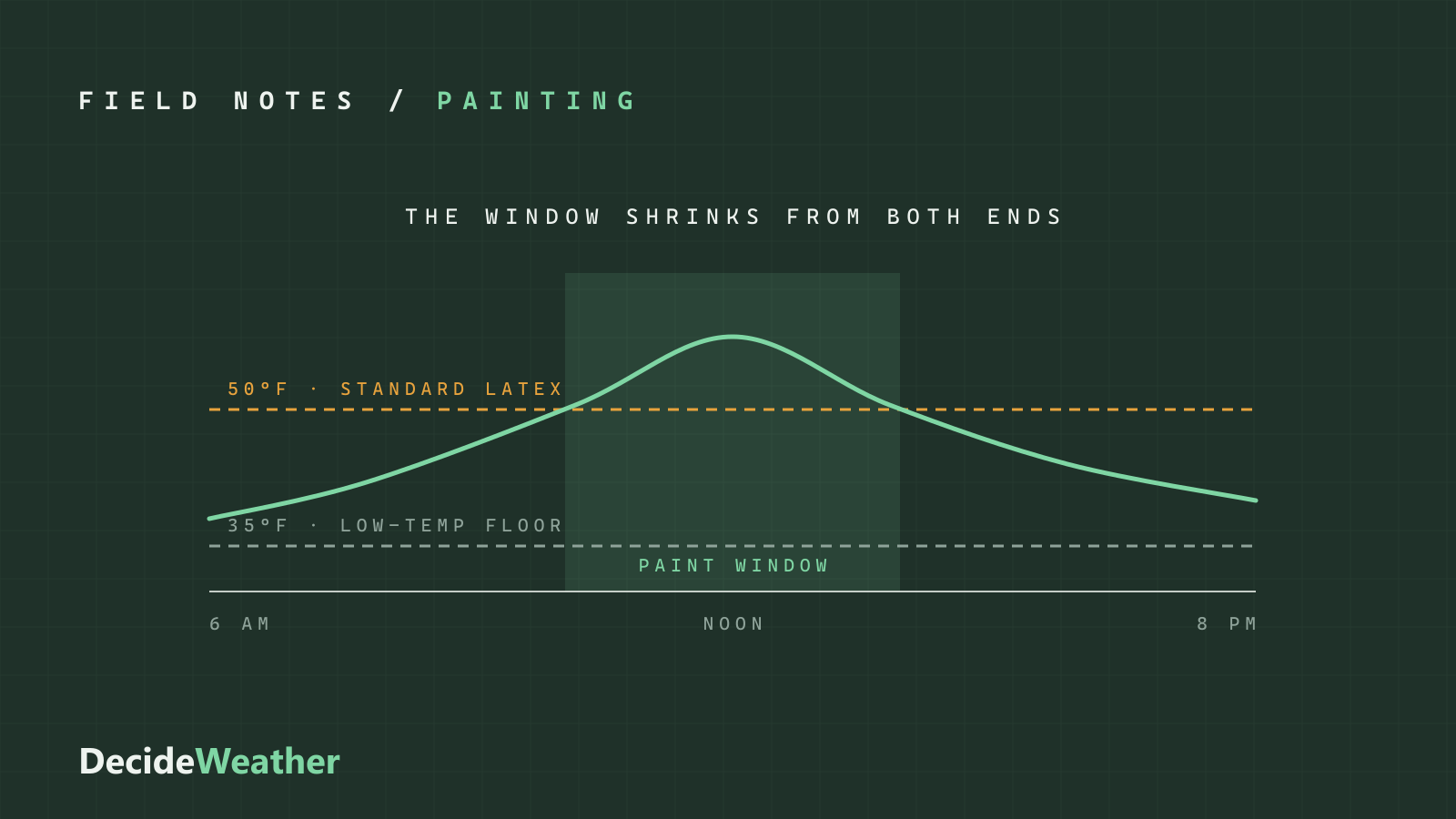
Every fall the question arrives on the same morning: it’s 41°F at 7 a.m., the forecast high is 58°F, and there are three houses left on the board. Can you paint today? Maybe. The number on the can is only the start of the answer. An exterior paint job is decided by how warm it stays while the film dries, not by the temperature when the brush touches the siding.
The numbers on the can
Exterior coatings come with a minimum application temperature, and it covers both the air and the surface.
- Standard acrylic latex: usually 50°F minimum.
- Oil-based and alkyd: often 40–45°F. The film dries more slowly, but it doesn’t depend on water evaporating to coalesce.
- Low-temperature latex: many major manufacturers’ lines are rated to 35°F, and that’s the main reason they exist. They buy you the shoulder season, not the winter.
These minimums apply to the surface as much as the air, and in fall the two can be far apart. North and west walls in shade sit several degrees colder than the thermometer on the truck. A south wall in full sun can run warmer. The same house can have a paintable side and an unpaintable side at 10 a.m.
Why the drying period matters more than the application
Latex paint doesn’t dry the way people picture. As the water leaves, polymer particles pack together and fuse into a continuous film, a process called coalescence, and it needs warmth. If the film goes cold before it finishes, it can crack, lose adhesion, and chalk early. There’s no warning on the day. You find out next spring.
So the real test for a fall paint day is the trajectory:
- Afternoon high: does the day even reach the product’s minimum, and for how long?
- Evening drop: fall temperatures fall fast after 4 p.m. A coat applied at 2 p.m. still has hours of drying left when the air slides through the 40s.
- Dew: as the air cools toward its dew point, moisture condenses on the siding. That can wet a film that isn’t dry yet. We’ve covered why dew point, not temperature, sets dry time. In fall the two squeeze the day from both ends.
The paintable window on a mid-October day is often just late morning to mid-afternoon: after the surface warms and the dew burns off, and before the evening drop. The diagram above shows it.
Working the shoulder season
- Start on the sunny side, finish early. Follow the sun around the house and stop applying in time for the last coat to set before the temperature falls.
- Check the surface, not the truck. An infrared thermometer on the shaded wall ends a lot of arguments.
- Use low-temp paint for the dates, not the conditions. A 35°F rating widens the window but doesn’t make dew or a hard overnight freeze safe.
- Watch for surfactant leaching. Tan or white sticky streaks on fresh latex after a cool, damp night are water-soluble ingredients weeping out. They usually rinse off, but tell the customer before they call you about it.
Seeing the whole day at once
DecideWeather’s Painting operation reads the hours you’ll be working and the hours after them together. Hours below 35°F are a Stop. Hours from 35°F to 50°F are a Caution, because only a low-temperature formula belongs there. The recommendation also watches the dew point spread: a gap of 3°F or less between air temperature and dew point is a Stop for condensation, and 3–5°F is a Caution.
Tap any hour on a Job Site card to see exactly which of those closed it. When you’re choosing which of the season’s last good days to book, Work Windows ranks the best stretches for each site across the next ten days.