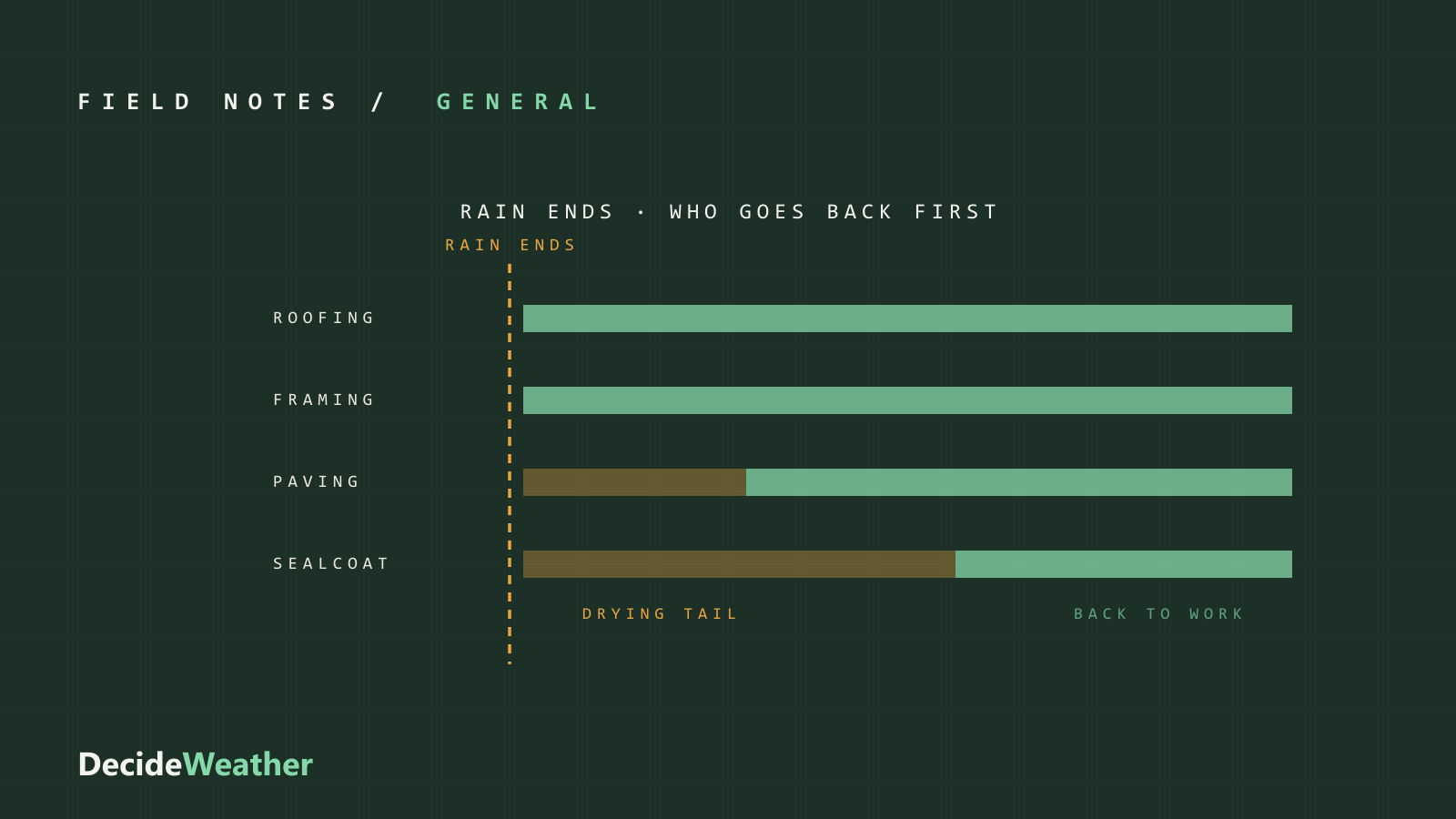
A line of showers moves through at noon and shuts down every site in the county the same way. By 1:30, the difference shows: the roofing crew is back on the deck, the framers never really left, the concrete finisher is inspecting a slab and doing math — and the sealcoat rig is still parked, and will be all afternoon. Same rain, same clearing, four different answers. The order isn’t habit. It’s physics, and it’s worth making explicit because scheduling around it is where multi-trade outfits win back lost half-days.
The restart order, roughly
First back: roofing and general construction. These trades stop for the rain itself — wet handling, slick footing, open assemblies — not for the wetness it leaves behind. Once the rain ends and surfaces are safe, the reasons to stand down are gone. A tear-off resumes when the deck is walkable; framing barely pauses for a passing shower. The surface drying out is a safety-and-quality detail, not a gate.
Middle, on its own clock: concrete. Concrete’s restart isn’t about the ground — it’s about where the slab was when the rain arrived. Rain before the pour is a scheduling delay. Rain on an unset surface is damage control. Rain after final set is nothing. The crew’s answer comes off the slab’s countdown, not the sky’s.
Last: paving, and then sealcoating. These are the trades where the work surface itself has to dry before the product is any good. Paving tolerates damp but not wet and not saturated; sealcoating needs genuinely dry pavement and waits the longest of anyone — often hours of good drying weather after the rain ends, sometimes until tomorrow. Their delay doesn’t end with the rain; it ends when the drying does.
(Lawn and spray crews live by the same logic one surface over — turf carries its own drying clock, and saturated soil holds equipment off long after the grass looks fine.)
Why the tail matters more than the rain
For the surface-bound trades, the real schedule cost of a shower isn’t its duration — it’s the drying tail behind it. Twenty minutes of rain plus two-plus hours of drying is a three-hour hole in a sealcoat day, and the drying half of that hole is invisible on a radar app. The tail also stretches and shrinks with conditions: sun, wind, surface temperature, and humidity can make the same tenth of an inch a ninety-minute wait or a rest-of-day one.
That asymmetry is the practical takeaway for anyone running mixed crews:
- Re-sequence, don’t just wait — the hours a lot spends drying are workable hours for roofing, framing, and prep
- Shower timing beats shower size — a morning shower costs a sealcoat day its start; the same shower at 3 p.m. costs nothing
- The lot that drains badly restarts last, every time — route accordingly
- Concrete answers to its own clock — check the slab’s age, not the pavement
DecideWeather applies exactly this asymmetry: after rain ends, roofing and construction recommendations release with the clearing, while paving and sealcoating hold through a drying tail before the surface reads workable again — so “when can we go back?” gets a different answer per trade, the way it should.