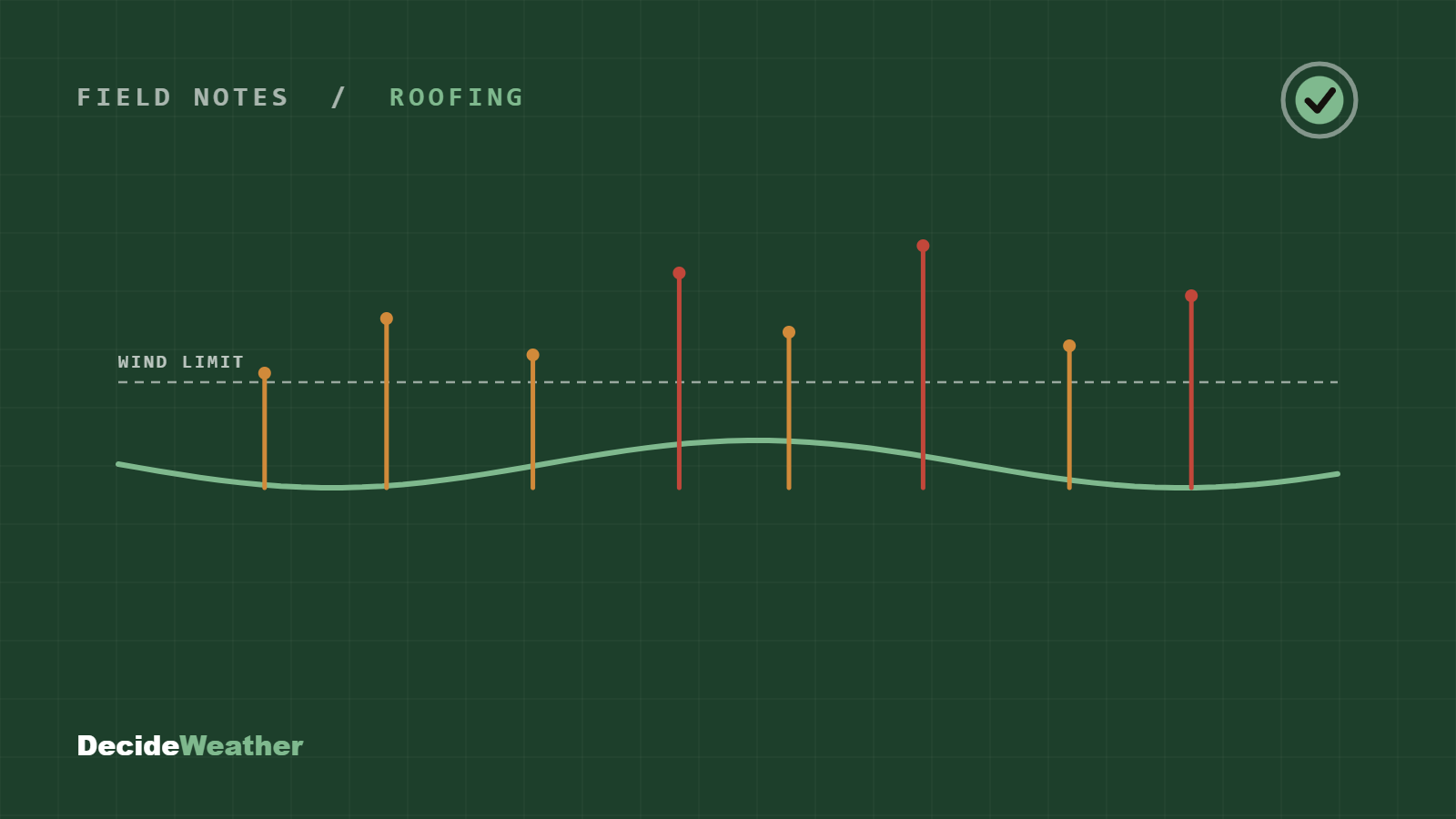
Most forecasts lead with sustained wind — a steady average over ten minutes. But on a roof, it’s rarely the average that sends someone home. It’s the gust.
Why gusts matter more on a roof
A sustained 12 mph wind sounds harmless. But if it’s gusting to 28, that gust is what catches a full sheet of underlayment, lifts a stack of shingles, or throws a worker off balance at the eave. Crews and OSHA guidance both think in terms of peak gusts and material handling, not the ten-minute average.
The problem is that gusts are far more variable than sustained wind and far more sensitive to local terrain, time of day, and the passage of fronts. A clean regional average can hide a gusty afternoon completely.
What we forecast instead
For roofing operations we track the peak gust through your working hours, not just the sustained value, and we check it against the threshold you set for the job — tear-off, dry-in, and shingle each tolerate different conditions.
We also watch when the gusts arrive. A calm morning that turns gusty after lunch isn’t a no-go day — it’s a half-day window. Knowing that the deck has to be buttoned up by 1 p.m. is a very different plan than scrubbing the day entirely.
The practical call
- Morning calm, afternoon gusts: dry-in early, stage the rest
- Gusts above your limit all day: no-go, reschedule before the truck loads
- Borderline sustained but high gust spread: treat it as the gust, not the average
The average tells you what the day feels like. The gust tells you whether you can work. We forecast the one that actually matters for the call.